Salkantay Trek in February
Hello, traveler! This is Jhoel, your adventure guide, and in this blog I will tell you everything you need to know if you are thinking about doing the Salkantay Trek in February—updated for the 2026 season.
If you have made it here, chances are you are seriously considering this hike and wondering if February is a good time to go. Stay with me, because I will answer the most common questions and give you a real, honest look at what to expect during this time of year.
Trekking the Salkantay Trek in February
Now, if you are still not sure what the Salkantay Trek is or why so many people choose it as an alternative to the Inca Trail, I invite you to check out [Salkantay Trek 4 Days], where we explain everything in more detail.
Once you are clear on what the trek involves, it is time to dive into what it is really like to do it in February. These are the most frequently asked questions from travelers:
What is the weather like on the Salkantay Trek in February?
What are the temperatures at each campsite?
What are the trail conditions like during this month?
Is it actually worth hiking Salkantay in February?
If you have been asking yourself the same things, let us break it all down one by one.
What is the weather like on the Salkantay Trek in February?
February sits right at the peak of the rainy season in the Peruvian Andes. It remains the wettest month of the year, and based on the last seasons (2024–2026), rainfall has been slightly stronger and more consistent than in previous years.
You can expect:
Daily rain, especially in the afternoons.
Brief clear skies early in the morning.
Thick fog around high passes.
Very lush and vibrant green vegetation.
Strong, fast-flowing rivers along the route.
Because the Inca Trail is closed in February for maintenance, many travelers look to the Salkantay Trail as the best open alternative to reach Machu Picchu. And even though it may be more demanding during this month, it continues to be one of the most rewarding routes.
More info about: Inca Trail in February
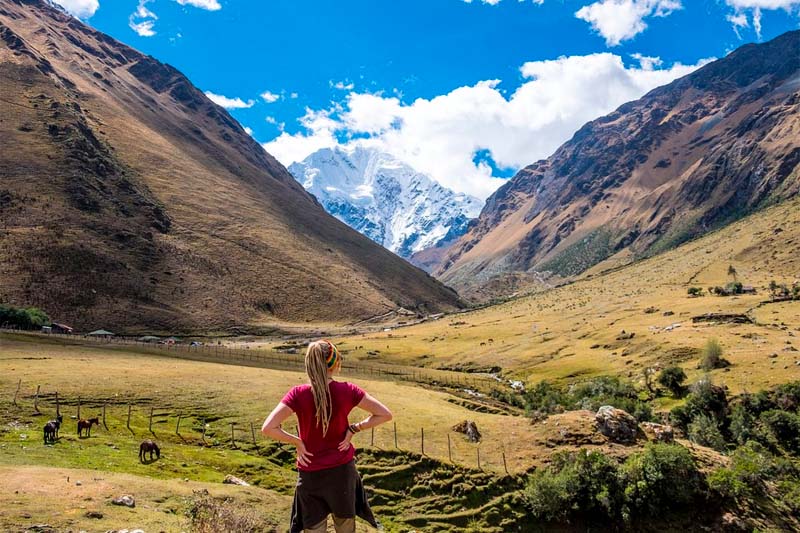
February turns the entire trail into a dramatic landscape: cloud forests wrapped in mist, mountains covered in swirling clouds, and intense shades of green that make the experience feel wild and alive.
To enjoy this trek safely in 2026, you will absolutely need:
A high-quality waterproof jacket
Quick-dry layers
Warm clothing for the high-altitude camps
Waterproof boots with good grip
A backpack rain cover
A strong, positive mindset for rainy-season trekking
What are the temperatures at each campsite in February?
Temperatures along the Salkantay Trek vary significantly depending on the altitude. Here is the updated breakdown based on recent February seasons:
Soraypampa
Altitude: 3,900 m / 12,795 ft
Night: –1°C to 2°C (30°F–36°F)
Day: 4°C to 10°C (39°F–50°F)
Cold, windy, and damp conditions are very common here. Thermal layers and a proper sleeping bag rated for cold temperatures are essential.
Book Your: Bus to Soraypampa if you wish to do the Salkantay trek on your own.
Chaullay
Altitude: 2,900 m / 9,514 ft
Night: Around 9°C (48°F)
Day: Up to 17°C (62°F)
Humidity is high, which often makes it feel cooler than the actual temperature.
Lucmabamba / La Playa
Altitude: 2,000–2,100 m / 6,561–6,890 ft
Day: 23°C to 26°C (73°F–79°F)
Night: 14°C to 16°C (57°F–60°F)
Warm, tropical, and consistently humid. Light, breathable, but waterproof clothing works best.
Aguas Calientes
Altitude: 2,040 m / 6,693 ft
Temperature: 20°C to 24°C (68°F–75°F)
Frequent showers continue through February, especially in the late afternoon.
What are the trail conditions like on the Salkantay Trek in February?
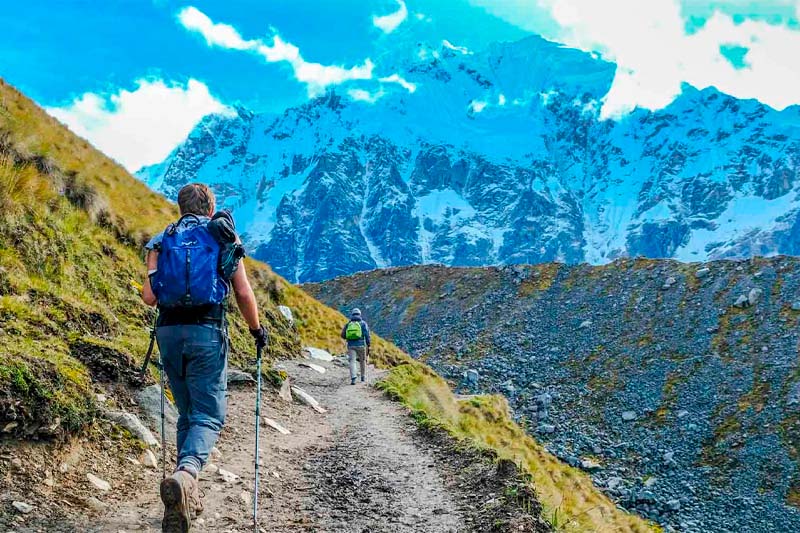
Trail conditions in February are the most challenging of the entire year. With the strongest rains falling this month, the Salkantay Trail frequently presents:
Muddy and slippery sections
Standing water on parts of the path
Unstable rocks
Several stream crossings
Occasional landslide-prone areas (operators monitor this daily)
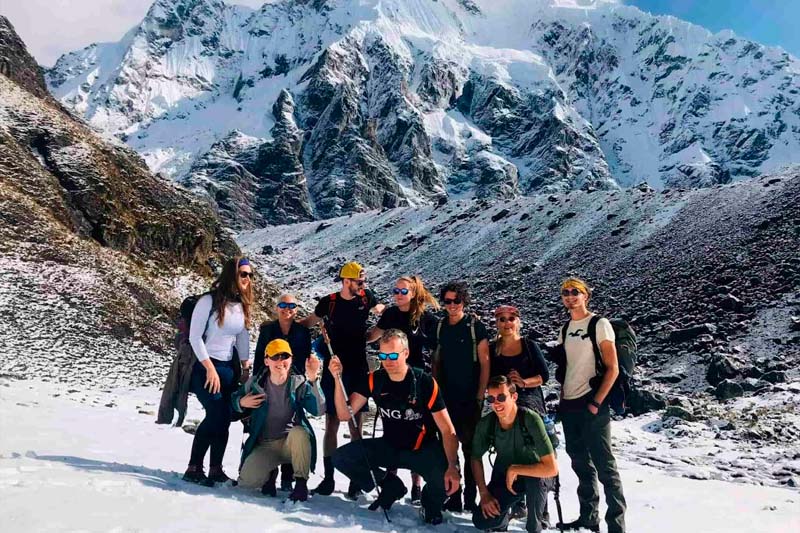
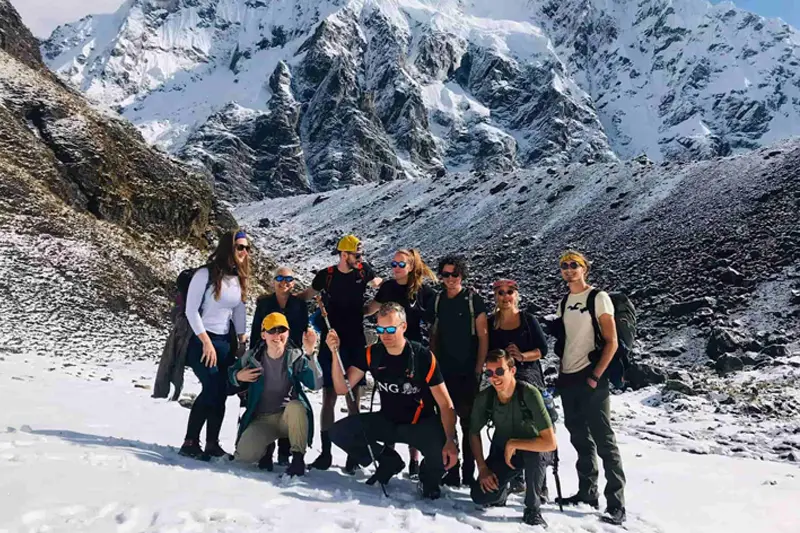
Salkantay Pass (4,630 m / 15,190 ft)
You should expect:
Rain
Strong winds
Fog
And sometimes snow or sleet
Because the pass reaches such a high altitude, acclimatization is crucial to avoid discomfort or altitude-related symptoms. Arriving in Cusco 2 days before the trek is strongly recommended.
Despite these challenges, February offers something that many trekkers love: solitude. With the Inca Trail closed, the Salkantay Trek stays open and becomes the main alternative—but with far fewer hikers than normal.
This means:
Quieter trails
Peaceful campsites
A deeper connection to nature
A more intimate experience with the Andes
Is it worth hiking the Salkantay Trek in February?
It depends on what you are looking for.
If you want:
Dry trails
Blue skies
Easy walking
Perfect photos
Then February may not be the ideal month.
But if you seek:
A wild, raw, unfiltered experience
Powerful scenery
Misty mountains
Rushing rivers
Fewer people
A sense of pure adventure
Then February can offer one of the most memorable versions of the Salkantay Trek.
This route is considered tougher than the Inca Trail, especially during the rainy season, but those who take it on in February often say they felt more connected to the mountains, the weather, and the journey itself.
You will hear powerful rivers roaring, walk beneath dramatic skies, and reach Machu Picchu with the feeling that you truly earned every step.
Photo gallery of The Salkantay Trek in March
Duration: 4 Days
Location: Peru, Cusco, Salkantay
Salkantay Trek 4 days 3 nights to Machu Picchu - The best trekking experience to Machu Picchu, immerse yourself in an exciting adventure.
Duration: 5 Days
Location: Peru, Cusco, Salkantay
Salkantay trek to Machu Picchu 5 days is the second most popular trek to get the iconic city of Machu Picchu.