Hello, traveler! This is Jhoel, your adventure guide, and in this blog I will tell you everything you need to know if you are thinking about doing the Salkantay Trek in March—updated for the 2026 trekking season.
If you have made it here, chances are you are seriously considering this hike and wondering if March is a good time to go. Stick around, because I will answer the most common questions and give you a real, honest look at what to expect during this time of year.
Trekking the Salkantay Trek in March
Now, if you are still not sure what the Salkantay Trek is or why so many people choose it as an alternative to the Inca Trail 4 Days, I invite you to check out [Salkantay Trek 4 Days], where we explain everything in more detail.
Once you are clear on what the trek involves, it is time to dive into what it is really like to do it in March.
What is the weather like on the Salkantay Trek in March?
March is still part of the rainy season, but it also marks the transition into the shoulder season, when weather conditions slowly begin to improve. While you will still experience frequent rain—especially in the afternoons—you will also
start getting more stable mornings, pockets of sunlight, and slightly clearer visibility compared to January and February.
March is also less intense than February because rainfall, although present, starts decreasing week by week. This makes March a decent time to hike the Salkantay Trek, especially if you want:
Unlike the Inca Trail—which is closed in February and fully booked months in advance for March—the Salkantay Trail remains open year-round and offers a more remote, adventurous route to Machu Picchu.
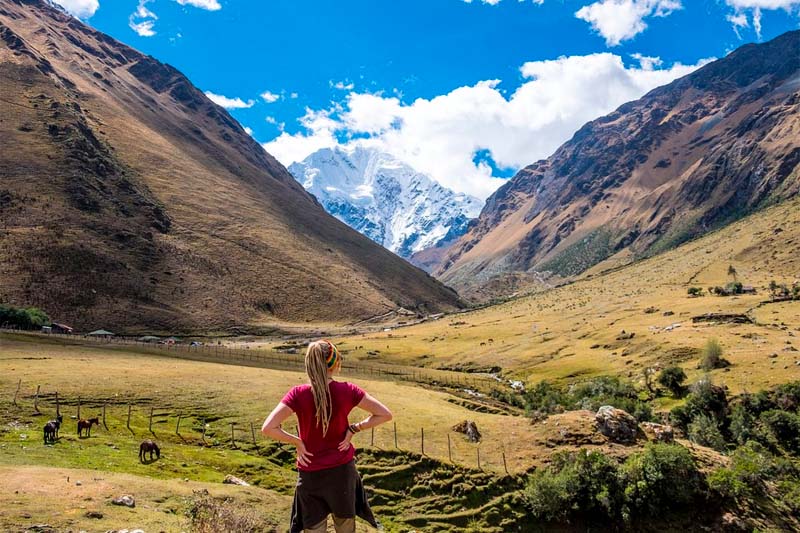
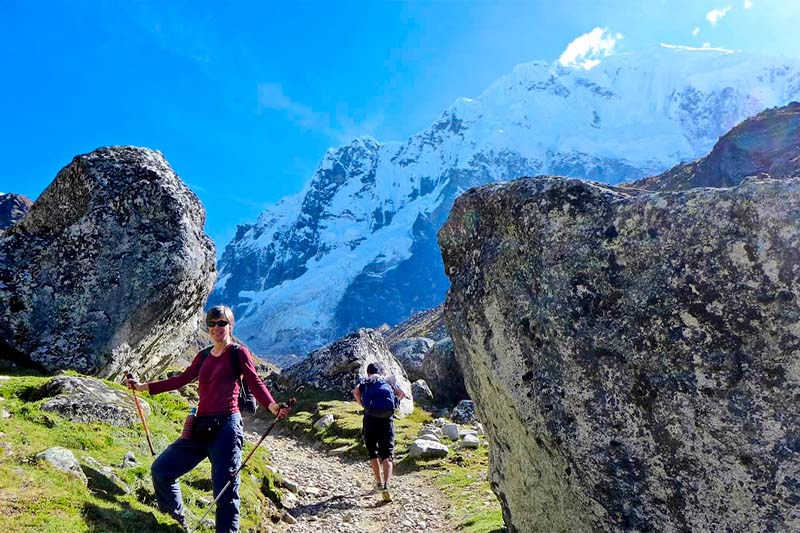
The scenery in March is vibrant: cloud forests glowing in green, powerful rivers, waterfalls in full flow, and Salkantay Mountain revealing itself little by little as you climb higher.
For this month, packing correctly is your superpower: a rain jacket, waterproof backpack cover, dry bags, warm layers, and sturdy waterproof boots are essential.
Despite the moisture, March rewards you with dramatic views, intense colors, and the feeling of walking through a living, breathing landscape.
What are the temperatures at each campsite in March?
As always, the Salkantay Trek takes you through multiple ecosystems and elevations. Here’s the updated 2026 temperature breakdown:
Soraypampa
Altitude: 3,900 m / 12,795 ft
Cold, windy, and sometimes frosty. Morning frost is still possible. Bring thermal layers and a high-quality sleeping bag rated for subzero temperatures.
Chaullay
Altitude: 2,900 m / 9,514 ft
Nights: ~10°C (50°F)
Days: Up to 18°C (64°F)
Humidity increases significantly. This zone feels tropical compared to Soraypampa.
Lucmabamba / La Playa
Altitude: 2,000–2,100 m / 6,561–6,890 ft
You are now in the cloud forest. It’s warm, humid, and green. Light but waterproof clothing is ideal. Portable rain ponchos come in handy here.
Aguas Calientes
Altitude: 2,040 m / 6,693 ft
Warm and humid all day. Expect evening showers. Keep your electronics and clothes dry.
What are the trail conditions like on the Salkantay Trek in March?
Trail conditions in March still reflect the rainy season, but with slightly better stability compared to February.
Expect:
Muddy and slippery segments
Standing water on the trail
Stream crossings
Fog near the Salkantay Pass
Loose rocks after heavy rain
Dense, humid vegetation in the jungle section
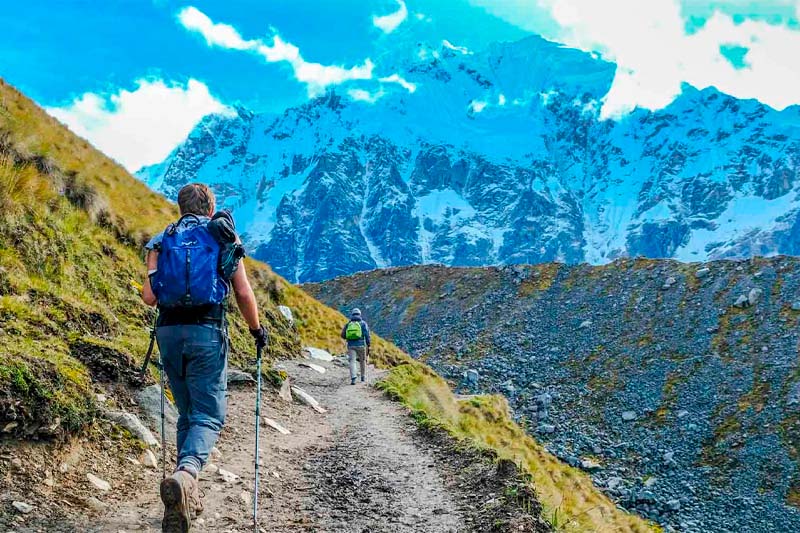
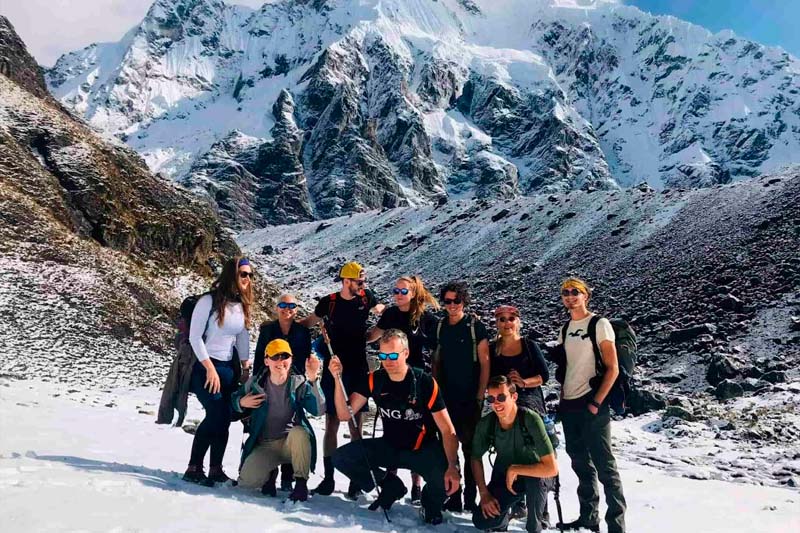
The ascent to the Salkantay Pass (4,650 m / 15,255 ft) may be cloudy and damp, but when the skies open even a little, the view is absolutely unforgettable—one of the most dramatic moments of the trek.
Once you descend past the pass, the trek transitions into a lush jungle terrain with waterfalls, orchids, coffee plantations, and thick vegetation. This is where March shines the most: everything is alive and vibrant.
March is a great month for hikers who want:
Crowds are far lower than during dry season, but the trail remains perfectly accessible.
Is it worth hiking the Salkantay Trek in March?
Absolutely—as long as you are prepared.
March offers:
However, it also requires:
March may not provide the bright blue skies of May, June, or July, but it gives you something different—the Andes at their most alive.
Waterfalls roar, birds flourish, flowers bloom, and the mountains breathe in and out of the mist.
Those who hike in March often say the experience feels more personal, more challenging, and ultimately more rewarding.
Thanks for joining me on this breakdown of what it is like to hike the Salkantay Trek in March. If you still have questions about gear, packing, or logistics, stay tuned—I will be sharing another post soon with tips to help you get ready for this route the smart way.
Walk with respect, walk with purpose, and remember—the trail always gives back to those who walk it with heart.
Now that you know what the Salkantay Trek in March is really like, and you have all the facts in your backpack, the next step is yours.
If this sounds like the kind of adventure you have been looking for, you are more than welcome to join us.
Frequently Asked Questions About the Salkantay Trek in March
Does the Salkantay Trek close at any point in March?
No. The Salkantay Trek remains open the entire month. Only the Inca Trail is affected by closures in February.
Is March a good month for photography?
Yes—if you like dramatic, moody shots. Expect misty peaks, rain-soaked forests, bright greens, and powerful waterfalls.
Do I need trekking poles in March?
Highly recommended. Poles give you extra stability on muddy and slippery sections and help during stream crossings.
How busy is Machu Picchu in March?
Moderately busy. It is less crowded than from May to September but more visited than in January or February.
Is snow possible at the Salkantay Pass in March?
Yes, light snowfall is still possible, especially early in the month. Temperatures remain cold at high altitude.
How many days should I acclimate before starting?
At least 2 days in Cusco is ideal. March humidity and altitude together can make the ascent more demanding.
Are landslides common in March?
Not as frequent as in February, but heavy rain still makes certain areas sensitive. Guides monitor route safety daily.
Photo gallery in the Salkantay Trek in March