


Machu Picchu is more than a spectacular collection of stone buildings. It was a royal estate, a working community and an ambitious engineering project built into a steep mountain landscape.
Some of the most interesting facts about Machu Picchu also challenge familiar stories. Research places its occupation earlier than the often-repeated date of 1450. Local people knew about it before Hiram Bingham arrived. And its survival owes as much to water management as to its famous walls.
Here is what the evidence tells us—and what is still open to interpretation.
Machu Picchu Facts at a Glance
| Question | Quick answer |
|---|---|
| Where is Machu Picchu? | In the Cusco region of Peru, above the Urubamba River valley. |
| How high is it? | Approximately 2,430 metres, or 7,972 feet, above sea level. |
| Who built it? | The Incas; it is closely associated with the ruler Pachacuti. |
| How old is it? | Radiocarbon evidence places its occupation at approximately 1420–1530. |
| What was its purpose? | A royal estate is the leading interpretation, with residential, ceremonial and agricultural functions. |
| Did Bingham discover an unknown place? | No. Local people already knew about it; his expedition helped bring international attention. |
| When did it become a World Heritage Site? | In 1983, for both its cultural and natural significance. |
The location and heritage information are documented by UNESCO. The revised chronology comes from research reported by Yale University.
1. Machu Picchu Was in Use Earlier Than Many Travel Guides Say
You will often read that Machu Picchu was built around 1450. That date reflects an older chronology, not a precisely documented construction year.
A study published in 2021 used radiocarbon dating of human remains to place occupation at approximately 1420–1530. This suggests the estate was functioning earlier than the traditional historical timeline allowed.
There is an important distinction: dating people buried at the site does not establish the construction date of every building. “Occupied by about 1420” is more accurate than claiming the entire complex was completed in that year. Yale University’s dating study
2. It Was Probably a Royal Estate, Not an Isolated Mystery City
The leading interpretation connects Machu Picchu with Pachacuti and his royal household.
That does not mean it was simply a holiday home. A royal estate required people to maintain buildings, prepare food and support elite visits, alongside ceremonial activities.
Researchers distinguish between visiting members of the royal household and retainers who lived at the estate more permanently. Thinking about both groups helps explain why the site contains spaces for everyday life as well as impressive ceremonial architecture. Yale research on Machu Picchu’s community
3. Its Residents Came From Different Parts of the Inca World
The people who lived at Machu Picchu did not all share the same geographical background.
A 2023 genetic study of individuals buried there found ancestry associated with several regions, including the Andes, the Pacific coast and Amazonia. The findings support a picture of a diverse community serving the estate.
This should not be romanticised as modern-style voluntary migration: movement within the Inca Empire could involve compulsory relocation.
The study also does not provide a census of everyone who lived there. It offers evidence about the individuals examined, helping researchers reconstruct a more complex human story. Yale University’s DNA study
4. Not Every Wall Uses the Same Famous Stonework
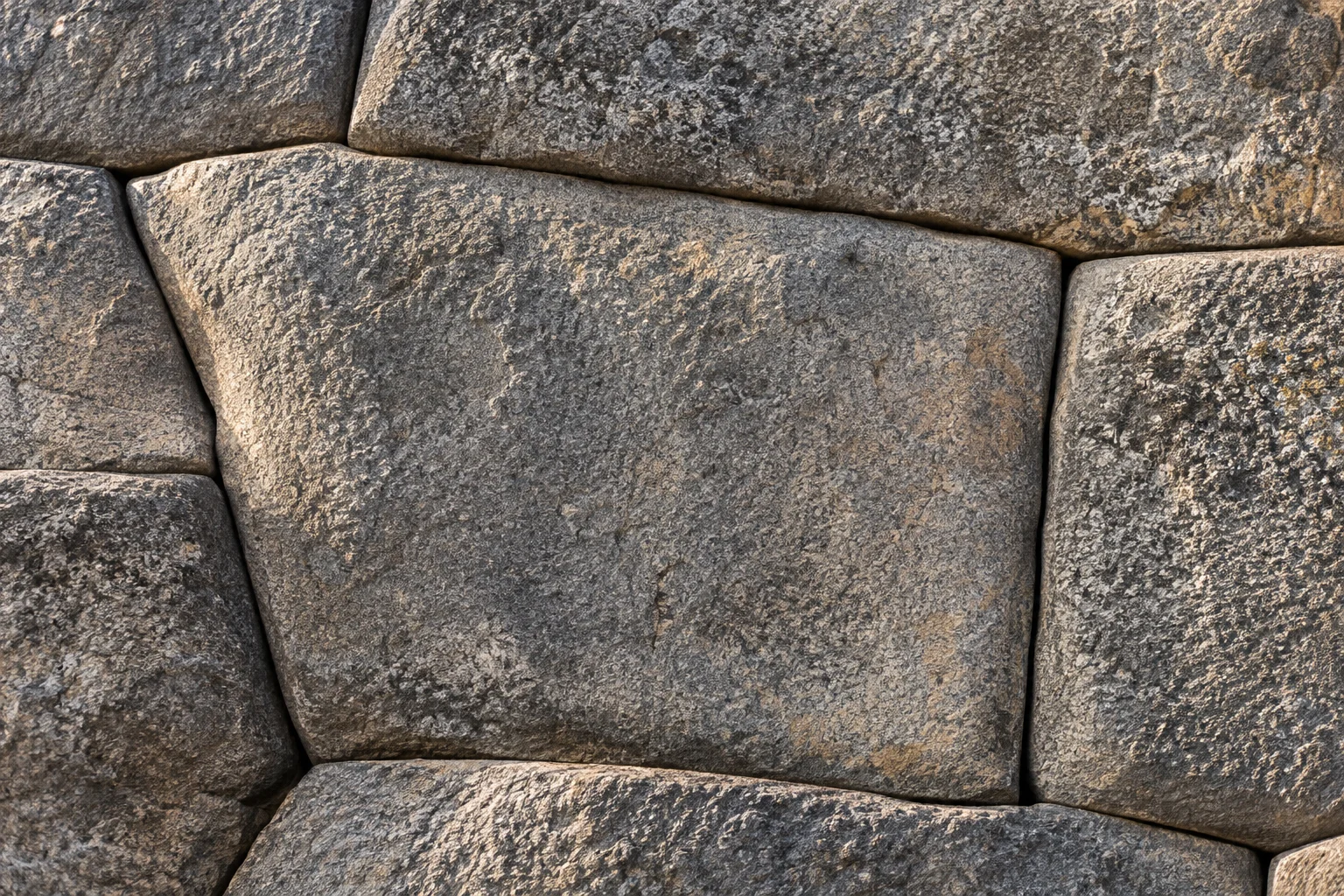
Machu Picchu’s tightly fitted masonry deserves attention, but “the whole city was built with identical mortar-free blocks” is an oversimplification.
Fine dressed stone appears alongside rougher construction. These differences can help visitors recognise the varying importance and functions of buildings.
Look at the joints and finish, rather than judging every wall by the most photographed examples. The variety is part of the architecture, not an imperfection to overlook. Smarthistory’s architectural analysis
5. Managing Water Was as Important as Shaping Stone
On a steep, rainy ridge, beautiful buildings would not last without effective drainage.
Machu Picchu’s engineering included channels, drainage outlets and subsurface layers that allowed water to move through the ground. A spring-fed system supplied a sequence of 16 fountains.
The terraces also did more than create growing space. They helped stabilise slopes and manage runoff, connecting agriculture with the protection of the settlement.
This is one of the most useful things to notice during a visit: the site works as a connected landscape. Walls, terraces and water systems were not separate achievements.
The engineering is documented by the American Society of Civil Engineers.
6. Geological Fractures May Have Helped the Builders
Why choose such a demanding location?
One geological interpretation suggests that fractures in the bedrock made stone easier to obtain and shape. The same fracture network may also have influenced water movement and the arrangement of the settlement.
Geologist Rualdo Menegat presented this explanation at a Geological Society of America meeting in 2019.
It is an intriguing research-based hypothesis—not proof that we know every reason the Incas selected this ridge. It also should not be reduced to the claim that “two faults explain everything.” Geological Society of America research announcement
7. Machu Picchu Is Resilient, but Not “Earthquake-Proof”
“Earthquake-proof” makes a memorable travel fact. It is also too strong.
Researchers studying the site have documented displaced blocks and other deformation features that they interpret as evidence of past earthquake damage. They also distinguish these effects from movement caused by unstable slopes.
The more interesting story is not that Machu Picchu was immune to natural forces. It is that its construction has endured while still recording evidence of damage, movement and repair.
Its survival should inspire respect for the engineering—not the assumption that the buildings cannot be harmed. Researcher’s account of the archaeoseismological study
8. The Temple of the Sun and Intihuatana Deserve More Than Simple Labels
The Temple of the Sun combines carefully finished masonry with a natural rock outcrop. Its relationship with sunlight, particularly around the June solstice, helps explain its ceremonial interpretation.
The Intihuatana is a carved rock associated with ritual and astronomical interpretations. Calling it simply a “clock” suggests more certainty about its precise operation than the evidence supports.
Both features are better understood through their relationship with light, stone and the surrounding landscape. Smarthistory
9. Its Abandonment Does Not Have One Proven Explanation
There is no securely established, single-event explanation for why life at the estate ended.
The collapse of Inca political structures during the Spanish conquest provides essential context, but it does not establish exactly when the last residents left or identify one immediate cause.
Similarly, a lack of evidence for a destructive Spanish attack is not proof that no Spaniard ever knew about the place.
A careful account separates those questions: why the estate stopped functioning, who knew about it, and whether it was attacked are not the same thing. The competing interpretations are explored in PBS NOVA’s investigation.
10. Machu Picchu Was Not Unknown Before Bingham
Hiram Bingham’s 1911 expedition was important, but describing him as the first person to discover Machu Picchu erases local knowledge.
Melchor Arteaga helped guide him towards the site, where local people already knew the ruins. Bingham’s contribution was to the expeditions, research and publicity that followed—not to revealing a place unknown to everyone. Yale Peabody Museum’s historical overview
There is also a relevant recent development. In July 2026, Peru’s Archivo General de la Nación highlighted manuscripts dated 1544 and 1545 that it says refer to the site. This reinforces the need for caution with the “lost city” narrative, although the announcement alone does not resolve every question about colonial knowledge or visits. Archivo General de la Nación announcement
Our guide to Hiram Bingham and Machu Picchu provides additional background on the expedition.
11. International Publicity Helped Create the Famous Image
Machu Picchu did not become a global symbol simply because an expedition reached it.
Photography, publications and the ability to circulate its story mattered. National Geographic devoted its April 1913 issue to the site, helping introduce the dramatic landscape to a much wider audience.
That history explains why certain views became so recognisable. The photograph helped shape the public imagination—but it could never show the whole settlement or the lives of its residents. National Geographic’s historical retrospective
12. The Artifacts Taken to Yale Were Returned to Peru
The story of the early expeditions also includes the removal of archaeological material and a long dispute over its return.
Following an agreement, materials were returned in shipments during 2011 and 2012. The collections became part of a research and conservation collaboration with the Universidad Nacional de San Antonio Abad del Cusco, associated with Casa Concha.
This is an important part of Machu Picchu’s modern history: understanding the site includes asking where its objects are kept, studied and interpreted. Yale’s account of the return and current research collaboration
13. The Surrounding Forest Is Part of What Makes It Important
Machu Picchu is not just an archaeological monument with a scenic background.
The wider sanctuary protects Andean ecosystems and wildlife, including orchids, numerous birds and spectacled bears. These are protected habitats, not guaranteed wildlife encounters. SERNANP’s sanctuary information
UNESCO recognises both the cultural and natural significance of the property. Tourism, infrastructure and environmental pressures make conservation an ongoing task.
Vegetation and relative isolation contributed to preservation, but the site seen today also depends on active management. Its survival is not a reason to take its future for granted. UNESCO
14. The Sun Gate Approach Is Not Part of Every Trek
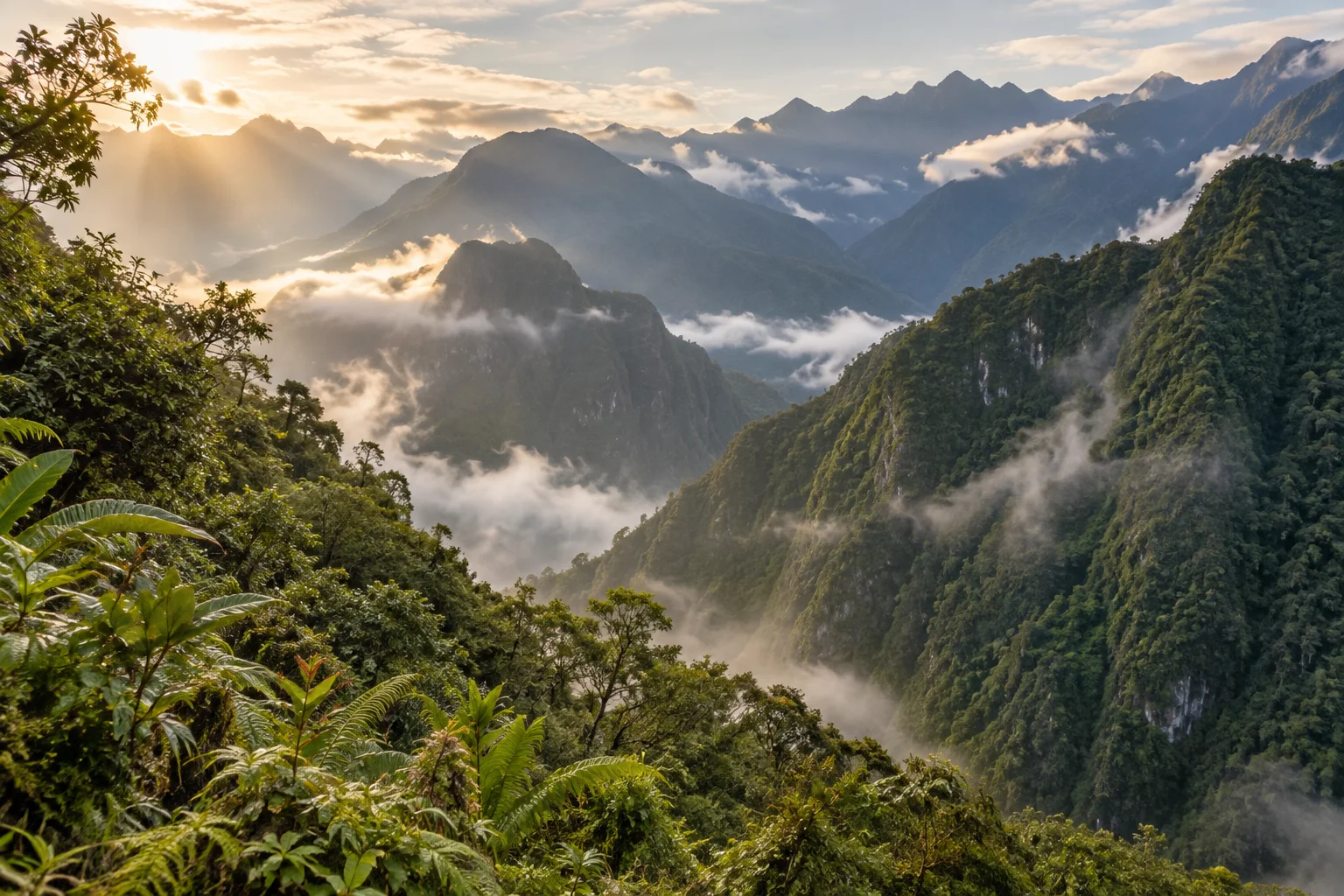
Intipunku, commonly called the Sun Gate, is associated with the Inca Trail approach to Machu Picchu. That does not mean every trek ending at Machu Picchu arrives there.
This distinction matters when comparing itineraries.
SAP ADVENTURES’ published Short Inca Trail itinerary includes Wiñay Wayna and the Sun Gate approach. Its five-day Salkantay itinerary reaches Machu Picchu through a different journey, via Machupicchu Pueblo.
Neither approach makes the other less worthwhile. They simply offer different experiences.
For the regulated Inca Trail, arrange the required booking through an authorised agency and confirm availability. A Machu Picchu admission ticket alone is not an Inca Trail permit. PROMPERÚ’s Inca Trail guide
15. Your Ticket Determines Which Parts You Can Visit
Learning about a building does not mean every ticket will take you past it.
At the time of this review, the official visitor system lists three circuits containing ten routes. Some routes are seasonal, and different tickets provide different combinations of viewpoints, archaeological areas or mountain walks. Official circuits and routes
For planning, use the Ministry of Culture’s official purchasing guidance and check availability for your actual travel date.
SAP ADVENTURES TIP: Before paying, request the Machu Picchu route name or code in writing. Then compare it with the places you most want to see.
Visitor information checked on September 24, 2026. Recheck official notices before booking or travelling.
Frequently Asked Questions
How old is Machu Picchu?
It is approximately 600 years old. Research places occupation from around 1420, although that does not establish one exact construction date for the entire site.
Is Machu Picchu one of the Seven Wonders of the World?
It was selected as one of the New Seven Wonders of the World in 2007. This is different from the ancient Seven Wonders and separate from UNESCO World Heritage status. El Peruano and New7Wonders’ explanation
Were all the buildings temples?
No. UNESCO describes approximately 200 structures with religious, ceremonial, astronomical and agricultural functions, alongside residential areas. It was a functioning settlement, not a collection of temples alone. UNESCO
Do you have to complete a trek to visit?
No. A multiday hike is one option, not a requirement. Train-based visits are also possible, as illustrated by SAP ADVENTURES’ Machu Picchu day-trip itinerary. The appropriate plan depends on transport, admission availability and your starting point.
Look Beyond the Famous View
The panorama is extraordinary, but the smaller details make Machu Picchu more meaningful: a drain beside a pathway, a change in stonework, a terrace holding a steep slope, or a building shaped around the rock beneath it.
Understanding those details turns a familiar photograph into a place with people, practical problems and an evolving history.
When you are ready to plan, SAP ADVENTURES can help you compare the journey and admission route that fit your interests—not just the itinerary with the most recognisable name.